Sustainable grass cover management of vineyards enhances pesticide sorption

Common ground cover management of vineyards in the Mediterranean area. a The continuous grassed inter-rows (GIR) pattern, b the continuous frequently tilled inter-rows (TIR) pattern, and c the most frequent pattern consisting of an alternation of GIR and TIR. Photocredits: J. Dollinger.

Vine is one of the most treated crops. In the Mediterranean area, vineyards are vulnerable to runoff and erosion, both vectors of pesticide dispersion. The substantial pesticide use along with acute dispersal risk threatens the surrounding water bodies. Pesticide sorption contributes to regulate their dispersal. Identifying sustainable management practices enhancing sorption is key to improve water quality. Vineyard cover cropping regulates runoff and erosion. Yet its influence on the sorption of contrasted pesticides and its variability remains to be characterized. Accordingly, this study evaluated the effects of grass cover management on the sorption of widely used pesticides. The study site was a catchment in Southern France, part of a long-term observatory, where grass cover has been monitored for the past 20 years. Topsoil was sampled from the vine rows and inter-rows of 23 vineyards. These vineyards had diverse soils, slopes, and grass cover rates. The adsorption coefficient of the soils was measured for two herbicides, glyphosate and napropamide, and a fungicide, difenoconazole. This study highlights the heterogeneity in cover cropping strategies. Spontaneous cover cropping dominated, and the most popular pattern was to alternate frequently tilled inter-rows and grassed inter-rows. For most of the vineyards, the rows and the tilled inter-rows had low-medium grass cover rate (0–50%). The majority of the grassed inter-rows had high grass cover rate (50–75%). The sorption coefficients of napropamide, difenoconazole, and glyphosate were similar for the vine rows and tilled inter-rows and significantly greater in grassed inter-rows. This was related to an increase of soil organic carbon from the low to high grass cover class. Other catchment characteristics did not affect pesticide sorption. This is the first study evaluating the influence of vineyard cover cropping on the sorption of pesticides at the catchment scale, and it shows that it is an efficient lever to enhance it.

Dollinger, J., Dagès, C., Vinatier, F. et al. Sustainable grass cover management of vineyards enhances pesticide sorption. Agron. Sustain. Dev. 45, 44 (2025). https://doi.org/10.1007/s13593-025-01039-w

Understand farmers’decision-making in peanut area allocation and management practices in a Sub-Sahelian region

Some typical scenes of peanut cultivation in the study area, from June to November 2018, at the Niakhar observatory (IRD), Senegal. a Peanut sowing, b weeding, c some components of the agroecosystem, d threshing operations, e winnowing to separate pods and fodder, f peanut transporting after harvest Photocredit: Sophie Djiba.

Peanut is a crucial cash crop across numerous West African countries, especially in Senegal, where small-scale family farms frequently rotate it with millet. Despite significant research on yield enhancement, the drivers behind farmers’ choices have been largely ignored. Recognizing that effective agricultural recommendations must be tailored to the specific context of individual farms, this study aimed for the first time, to understand the decision-making of peanut farmers in a typical rainfed region of the central-western Senegalese peanut basin. We surveyed 46 farmers, gathering data on their resources, perceptions, peanut area allocation, and management practices, as well as socio-economic outcomes. High-peanut farmers, with an average of 28% of their cultivated area allocated to peanut, had more resources than low-peanut farmers, which allocated only 3%. The former enhanced their peanut management by employing farm-saved seeds, hiring labor, and utilizing both manure and synthetic fertilizers. Their average peanut unshelled grain yield (625 kg ha−1) was the highest, although largely under the achievable yield. Their return on investment, which included the value of their own consumption, was also the highest (974%). Medium-peanut farmers presented intermediate characteristics. A widespread high level of self-consumption and investment in watermelon as a new cash crop suggested weak market opportunities for peanut. Low-peanut farmers identified lack of equipment and finance as major constraints, while high-peanut farmers cited lack of finance and quality seeds. All categories recognized peanut’s ecological advantages. These results highlight that limited peanut cultivation and unsustainable practices do not stem from farmers lacking technical knowledge or undervaluing peanut advantages but rather from the socio-economic constraints they face. Solutions for high-peanut farmers may not suit or be adopted by low-peanut farmers. Addressing this disparity requires multi-faceted research and innovations targeting both external and internal farm constraints, shifting from mere inputs provision to co-designing innovations directly with farmers.

Djiba, S., Clermont-Dauphin, C., Tounkara, A. et al. Understand farmers’decision-making in peanut area allocation and management practices in a Sub-Sahelian region. Agron. Sustain. Dev. 45, 40 (2025). https://doi.org/10.1007/s13593-025-01032-3

Yield gaps in soybean: causes and pathways for increasing yield in smallholder farming from Northeast China

Soybean fields of experimental site (d), surrounding farm (e), and smallholder (f) in Nenjiang county. Photocredit: J.C. Zhao.

A relevant pathway to meet future food production targets involves closing existing yield gaps, i.e., the difference between yields in researcher-managed trials and smallholder fields, through the adoption of technology. However, despite the availability of more productive and sustainable technologies, adoption remains low, and yield gaps persist. Understanding why smallholders fail to achieve high yields and how their productivity can be improved is crucial. To answer these issues, the soybean cropping system of Northeast China was selected as a case study. This is the first time that a generalizable framework that integrates crop modelling, long-term experimental data, statistics, and field surveys is proposed to map soybean yield gaps under various spatial scales (commercial farms, county, prefecture, and surveyed smallholders) and explain underlying causes. Pathways to bridge yield gaps are discussed. Compared with yield of researcher-managed experimental plots, soybean yields decreased from the farm to the county and again to the prefecture levels. At farm level, the yield gap was 0.34 t/ha, at county level 1.03 t/ha, and at prefecture level 1.17 t/ha. In the same order, a technical efficiency index decreased from 0.91 to 0.64. Poor agronomic management contributed to 73–86% of yield gap, followed by climate (26–13%) and soil constraints (less than 1%). Survey data showed that ridge planting pattern, the use of single compound fertilizers, and variety selection were the most important manageable variables affecting smallholder soybean yield. Using large-ridge cultivation and a rational application of fertilizers were critical for smallholders to achieve high yields. These findings suggest that bridging yield gaps in smallholder farming in the Northeast China remain a significant opportunity to improve food production. This study provides detailed information for closing yield gaps in smallholder fields. The framework is also applicable in other regions dominated by smallholder agriculture to develop sustainable intensification of production.

Zhao, J., Zhao, M., Huang, Z. et al. Yield gaps in soybean: causes and pathways for increasing yield in smallholder farming from Northeast China. Agron. Sustain. Dev. 45, 37 (2025). https://doi.org/10.1007/s13593-025-01030-5

Optimizing planting density for enhanced maize yield and resource use efficiency in China. A meta-analysis

A maize planting density experiment conducted at Yulin, Shaanxi Province, China. There were two different planting densities on both sides of the black dotted line. The purpose was to explore the effects of different planting densities on maize yield and yield components. Photo credit: Xiaoliang Qin.

Reasoned increases in planting density are key measures to enhance maize yields. However, most existing studies on maize planting density based on long time spans often fail to account for diverse microclimates. The impact of planting density on yield components has not also been well investigated in major production regions of China. Therefore, we conducted a meta-analysis of 1951 data pairs from 160 published papers (2013–2023) to assess the effects of increasing planting density on maize yield, yield components, phenotypic traits, and resource utilization and to determine optimal density increase ranges for different environments. The results showed that increasing planting density improved the leaf area index by 23.4%, plant height by 1.8%, aboveground dry matter accumulation by 15.9%, water use efficiency by 3.8%, nitrogen use efficiency and 34.2%, and grain yield by 10.0–11.0%. Dense planting also increased the maize ear number per area by 34.3% but decreased grain number per ear by 12.5%, 1000-grain weight by 7.2%, and harvest index by 2.4%. Notably, the density increase range emerged as the primary factor influencing yield and its components, with changes in grain number per ear the most significant contributor to yield variations. A 25–50% density increase range was identified as optimal, resulting in an 11.5–13.4% yield increase. Average local planting densities were 63,496 plants·ha–1 in the Northwest, 58,928 plants·ha–1 in the Huang-Huai-Hai region, 58,234 plants·ha–1 in the Northeast, and 51,761 plants·ha–1 in the Southwest. Here, we show for the first time that the optimal density increase range varied by region: 25–50% for the Northeast, >50% for the Huang-Huai-Hai and Southwest, and 0–25% for the Northwest. These findings highlight the importance of tailoring planting density to local conditions, offering a scientific basis for optimizing maize production across diverse regions in China.

Zhang, M., Zhao, X., Han, X. et al. Optimizing planting density for enhanced maize yield and resource use efficiency in China. A meta-analysis. Agron. Sustain. Dev. 45, 29 (2025). https://doi.org/10.1007/s13593-025-01027-0

Modelling the impact of nitrification inhibition in a fallow-based West African corn cropping system

https://media.springernature.com/full/springer-static/image/art%3A10.1007%2Fs13593-025-01026-1/MediaObjects/13593_2025_1026_Fig1_HTML.jpg?as=webp
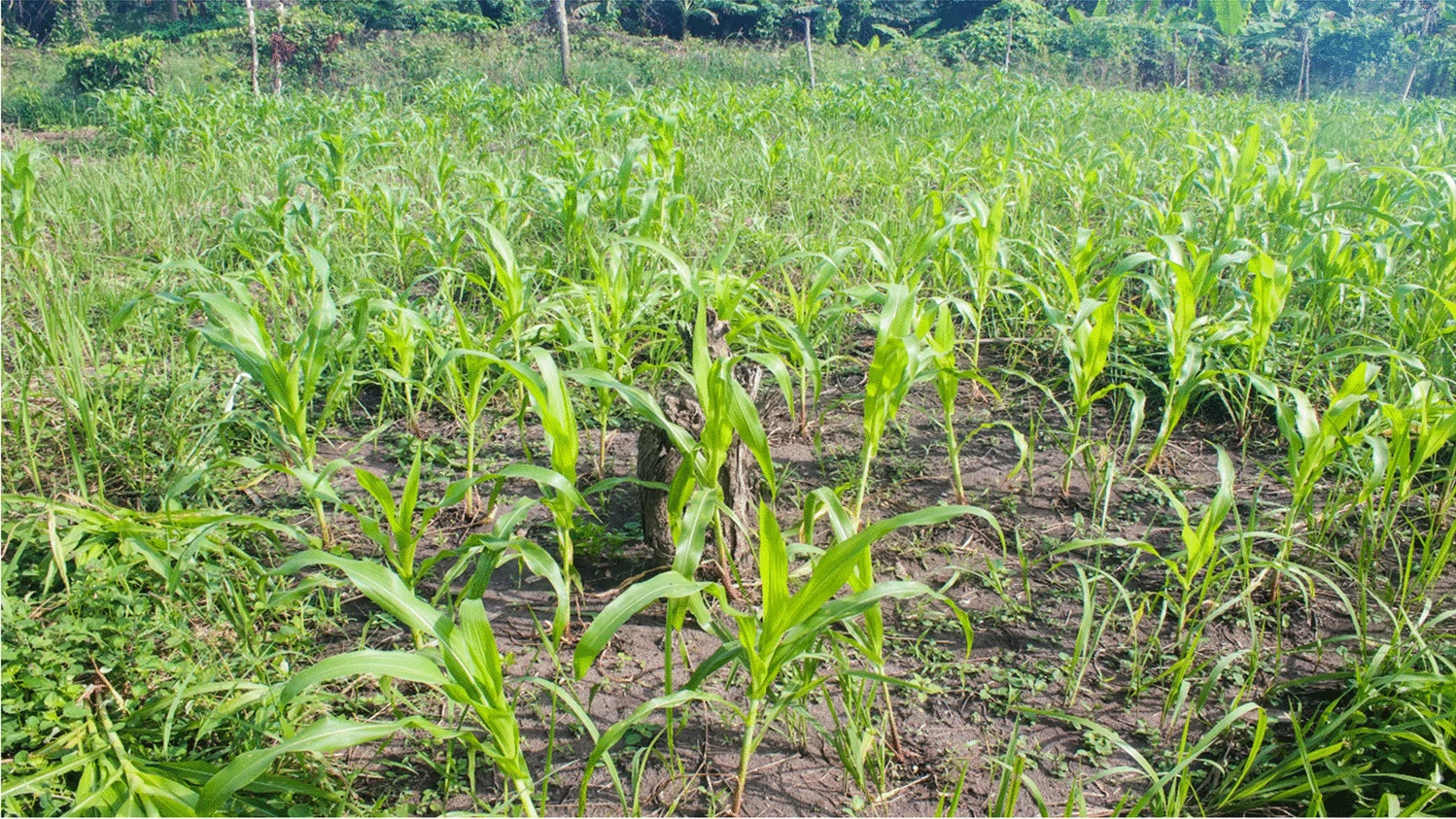
Corn field near Lamto reserve in Ivory Coast. It is managed with traditional practices (without pesticide, without fertilizer, without tillage, after slash-and-burn). Photocredit: Sébastien Barot.

To solve soil fertility problems, most smallholder farmers in sub-Saharan Africa use fallow periods. However, population growth along with land shortage tends to shorten the duration of fallows, resulting in a steady decline in soil fertility. Although nitrogen (N) plays a key role in soil fertility, current methods for maintaining N supply in cropping systems are inadequate, especially in N poor soils. Addressing this issue is crucial for improving agricultural productivity and reducing environmental impact. The objective of this study was to explore innovative ways to maintain N supply in N poor soils by identifying the appropriate levers and practices. We designed a general model describing N cycle in a cropping system in a humid savanna in Ivory Coast. We examined the impact of different processes involved in N cycle, including mineralization, nitrification, and fallow characteristics on the yield of a crop such as corn. Our study innovatively assesses the benefits of incorporating nitrification inhibition into traditional African cropping systems and provides a modelling tool to assess its impact. The model confirms that in low input agricultural systems, soil fertility is maintained by the increase in soil organic matter during fallow and its subsequent mineralization. We showed that variation in nitrification during the cropping cycle (fallow-crop) does not have a significant effect on corn yield. However, with the addition of N fertilizers, nitrification inhibition significantly increases crop yield. Indeed, nitrification inhibition increases the efficiency of fertilizer use, which reduces losses of N fertilizer. Furthermore, legume-based fallow is able to increase corn productivity much more than a nitrification-inhibiting fallow regardless of the length of fallow periods. Finally, the models suggest that using nitrification-inhibiting grasses as cover crops for corn would be beneficial if mineral N fertilizer is used.

Ouattara, W.A., Konaré, S., Tondoh, E.J. et al. Modelling the impact of nitrification inhibition in a fallow-based West African corn cropping system. Agron. Sustain. Dev. 45, 28 (2025). https://doi.org/10.1007/s13593-025-01026-1

Emergence of invasive weedy rice in Southeast Asia. A review

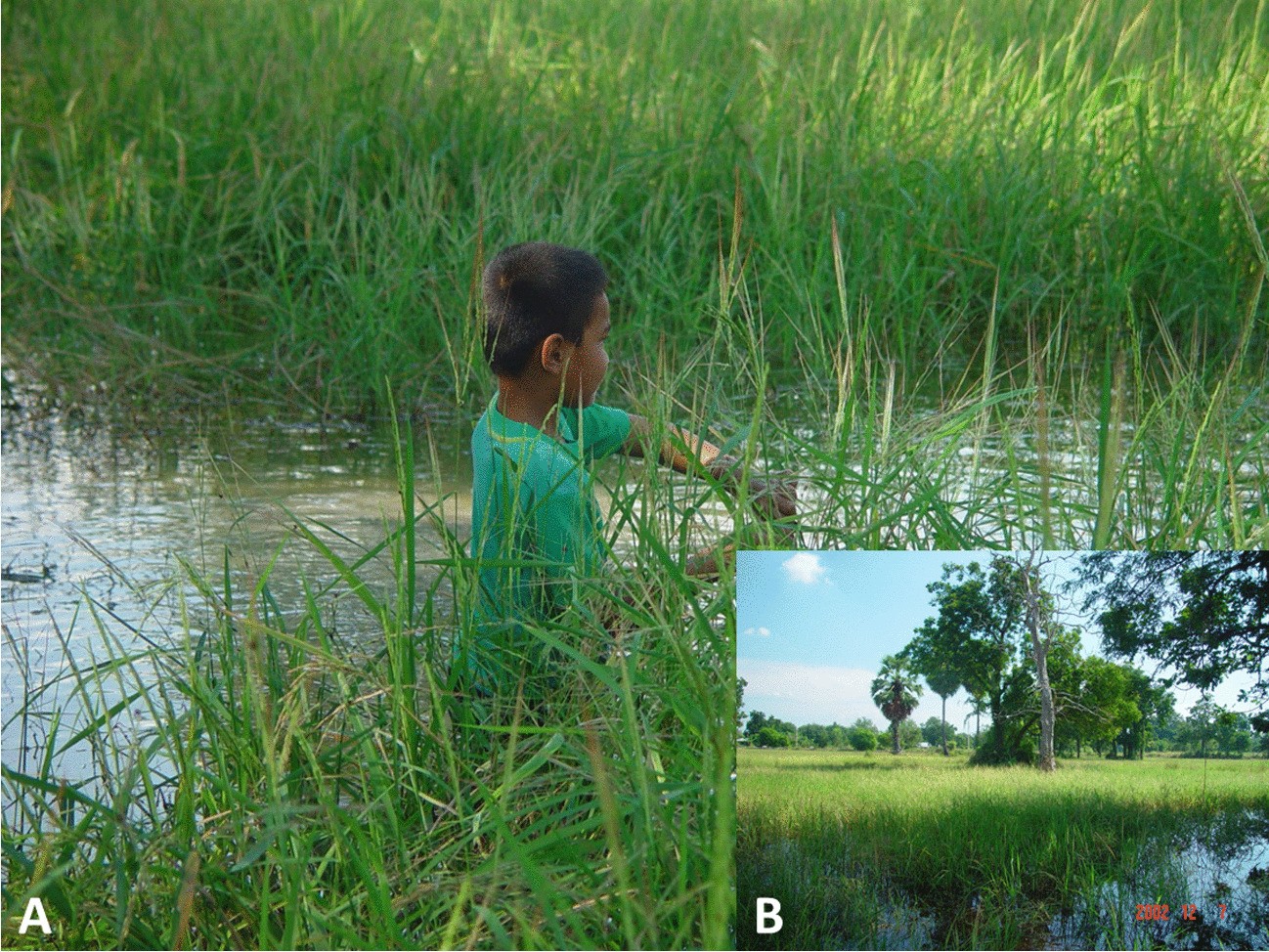
A boy with some pink-awned wild rice in the family’s rice field in Ayutthaya, Central Thailand (A), and a rice landscape with mixed population of cultivated, wild, and weedy rice at the same location (B). Photocredit: Chanya Maneechote.

This review seeks to describe the complete set of circumstances leading to the sudden invasiveness of weedy rice in Southeast Asia. The main finding is that weedy rice, like its wild ancestor, the common wild rice, is likely endemic to deepwater rice areas in Southeast Asia. Its recent ecological success in the wider region is based primarily on introgression of photoperiod insensitive trait from modern rice varieties. This has resulted in the removal of reproductive control by daylength in weedy rice, which broadens its adaptive capacity and increases hybridization opportunities. The paddy field environment favorable to weedy rice is created by modern crop management practices—from land preparation to direct seeding, combine harvesting, and chemical weed control. The arrival of modern rice technology at the end of the twentieth century has brought economic and social benefits to Southeast Asia, and also an unintended harm to rice production with invasive weedy rice. Weedy rice control should benefit from a comprehensive understanding of the mechanisms driving its sudden invasiveness and spread.

Jamjod, S., Maneechote, C., Pusadee, T. et al. Emergence of invasive weedy rice in Southeast Asia. A review. Agron. Sustain. Dev. 45, 23 (2025). https://doi.org/10.1007/s13593-025-01018-1

Vineyard design and plant material choices effect on grapevine yield: analysis of a big dataset in the south of France

Fig. 1
Vineyard heritage, commercial vineyard, and new plot designed in Languedoc-Roussillon, France. A Old vines in a commercial plot during budburst (60 years and 2800 vines per ha) located in the hinterland, photo credit by Fernandez-Mena, 2021. B Mid-aged commercial plot during spring (20 years and 4000 vines per ha), in the Mediterranean coastal plain at Domaine du Chapitre, photo credit by Bouisson, 2020. C New agro-designed vineyard with cover crops in the inter-row (3 years and 3300 vines per ha) from AViti experimental system at Domaine du Chapitre, SALSA project. Photo credit: Metral, 2021.

Strategic design decisions regarding wine label, plant material, vine age renewal, and planting choices are crucial for winegrowers when planning their future vineyards that will influence grapevine yield in the long term. However, the repercussions of these choices have mostly been studied in experimental vineyards and small datasets. Therefore, we are missing a comprehensive analysis of a large diversity of vineyard situations that can robustly provide avenues for improving vineyard design and ensure sustainable wine production. To fill this research gap, we analyzed a big sample of vineyards using random plot data (n = 3507) from surveys conducted among winegrowers of the Languedoc-Roussillon viticultural region. We carried out a data analysis that focused on examining the relationship between grapevine yield and (i) diverse vineyard management frameworks (wine label, organic management, irrigation), (ii) plant material (varieties, rootstocks), and (iii) planting choices (planting density, vine age as a proxy for vine lifespan and renewal). Our findings indicate that wine label greatly affected yield; in conjunction with vine age, they explained up to 40% of the total yield variance. Most cultivated varieties exhibited similar yield levels for the same type of wine label. Notably, SO4 rootstock displayed the best yield performance across multiple cultivated varieties. We observed an adverse effect of vine aging on grapevine yield, particularly in highly productive vineyards. In contrast, the impact of vine age on the yield of low-yield plots was almost negligible. Plots under organic farming presented lower yields, although they were scarce in the sample. Unexpectedly, planting density did not significantly affect yield. Overall, these results underscore the significance of conducting big data analysis from winegrowers at a regional level, when it comes to assessing the influence of vineyard design and plant material on yield.

Fernandez-Mena, H., Gautier, M., Hannin, H. et al. Vineyard design and plant material choices effect on grapevine yield: analysis of a big dataset in the south of France. Agron. Sustain. Dev. 45, 16 (2025). https://doi.org/10.1007/s13593-025-01012-7

Optimizing sustainability in rice-based cropping systems: a holistic approach for integrating soil carbon farming, energy efficiency, and greenhouse gas reduction strategies via resource conservation practices

Standing crops of the experimental plots
Standing crops of the experimental plots (photo credit: Pradeep Kumar Dash).

The study underscores the potential of rice-green gram systems under resource conservation technologies in enhancing sustainability and resilience in lowland rice agroecosystems, particularly in Eastern India. Conducted over multiple cropping seasons as part of a long-term experiment, the research evaluated six conservation practices, including zero tillage, green manure, and biochar, in comparison to conventional methods. Among these, zero tillage emerged as the most effective climate-smart practice, achieving the highest carbon sequestration rate (0.97 Mg ha-1 yr-1), substantial energy savings (52.0%–67.8%), and the lowest global warming potential. These findings demonstrate the capacity of resource conservation technologies to reduce greenhouse gas emissions, enhance soil organic carbon stocks, and improve productivity, thereby offering a sustainable pathway to mitigate methane emissions and balance agricultural productivity with environmental stewardship. This research highlights the vital role of innovative practices like zero tillage with residue management treatments in advancing climate-smart agriculture and achieving long-term ecological and agricultural resilience.

Dash, P.K., Bhattacharyya, P., Padhy, S.R. et al. Optimizing sustainability in rice-based cropping systems: a holistic approach for integrating soil carbon farming, energy efficiency, and greenhouse gas reduction strategies via resource conservation practices. Agron. Sustain. Dev. 45, 11 (2025). https://doi.org/10.1007/s13593-025-01005-6

Minimizing the potential risk of soil nitrogen loss through optimal fertilization practices in intensive agroecosystems

Fig. 1
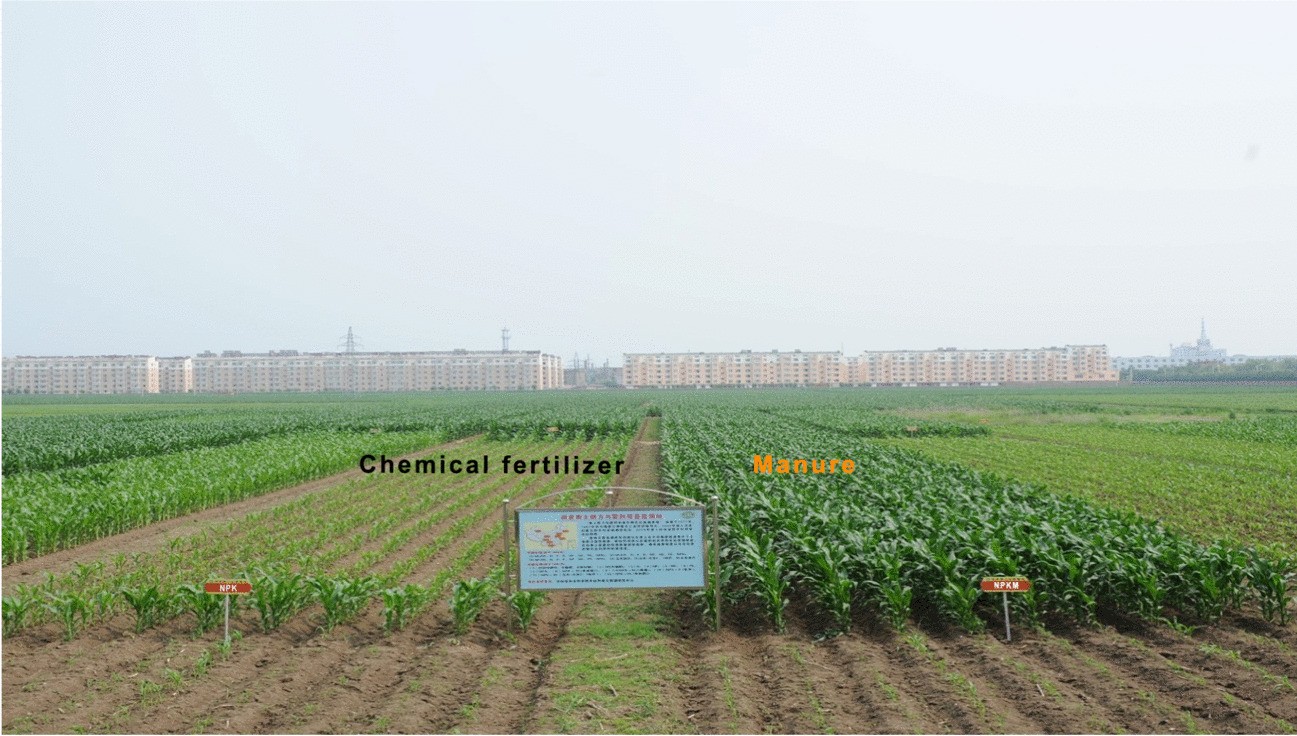
Assessment of gross nitrification and N immobilization rates under long-term chemical fertilizer and manure application treatments. Photocredit: Jun Wang.

Nitrification and nitrogen (N) immobilization are important pathways in soil N transformations, involving soil N loss and retention, respectively. The ratio of nitrification to N immobilization generally reflects the potential risk of soil N loss. However, little is known about the response of this ratio to anthropogenic carbon (C) and N inputs, but also climate and soil conditions. Here, we aimed to elucidate, for the first time, the impacts of chemical fertilizer and manure application on the ratio of gross nitrification to N immobilization by using 15N dilution technology, based on ten long-term fertilization trials spanning multiple climatic zones in eastern China. Results showed that manure application differentially increased gross N immobilization rather than nitrification compared to the chemical fertilizer treatment, leading to manure-induced decreases in gross nitrification to N immobilization ratio ranging from 1.2 to 93% across the sites. The decreased gross nitrification to N immobilization ratio in the manure treatment was mainly due to the increased ratio of bacteria to nitrifiers abundance. Manuring was more effective for a decrease in the gross nitrification to N immobilization ratio at sites characterized by high rainfall and low soil pH, as it prevented soil pH decline thereby favoring bacterial abundance and N immobilization. Consequently, manure application resulted in a substantial increase in soil total N accumulation, facilitated by increased microbial N immobilization that promoted microbial biomass. These findings suggest that substituting manure for chemical fertilizer in the areas with high rainfall and acidic soils promisingly reduces soil N loss risk, with positive consequences for soil N retention. This knowledge highlights the potential to reconcile soil N loss and fertility improvement through optimizing regional manure management, which offers valuable insights for the development of a tailored regional fertilization management strategy.

Wang, J., Zhang, L., Liu, K. et al. Minimizing the potential risk of soil nitrogen loss through optimal fertilization practices in intensive agroecosystems. Agron. Sustain. Dev. 45, 9 (2025). https://doi.org/10.1007/s13593-025-01006-5

The changing role of livestock in agrarian systems: a historical and multifunctional perspective from southern India

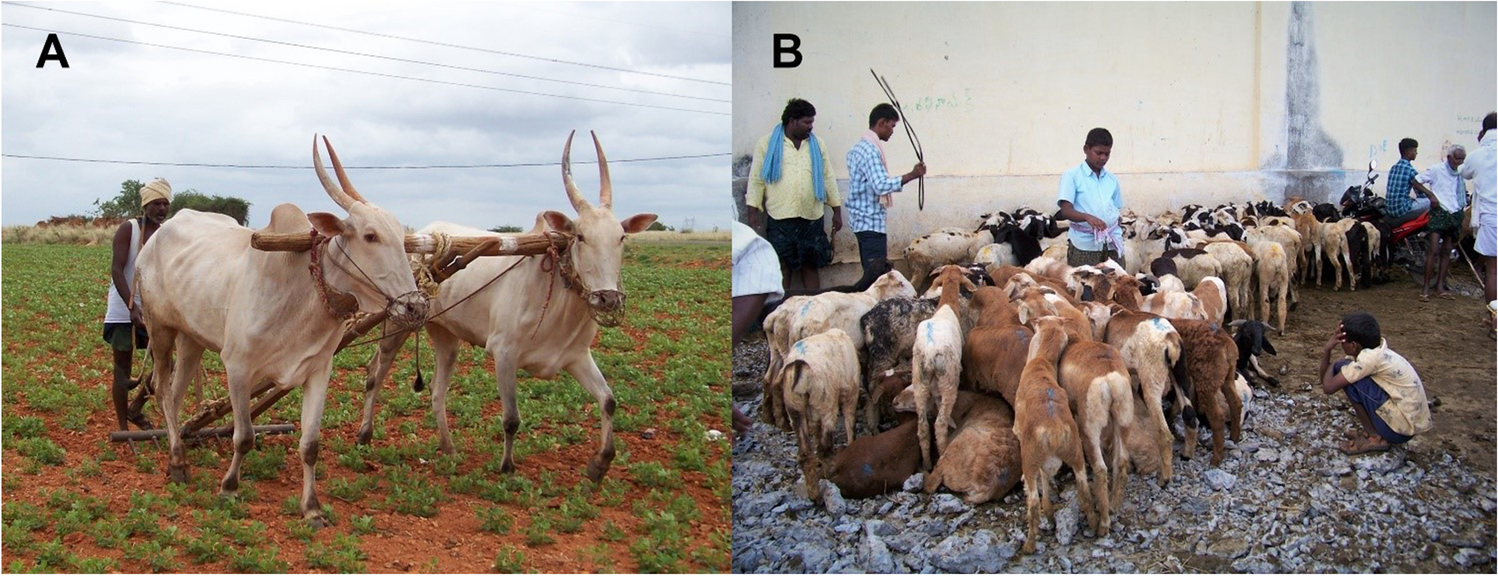
Examples of livestock functions in the study area today: weeding and hoeing a groundnut field using draft power (A) and selling sheep for meat purposes at Anantapur livestock market (B) Photocredit: C. Hemingway

Farm animals are often lumped together into a single “livestock” entity, reduced to the production of milk and meat and accused of being the cause of major environmental disruptions. However, livestock farming systems are highly diverse, and the functions of livestock encompass multiple dimensions. Based on the methods of comparative agriculture and the quantification of animal labor energy on farms, we explore the changing roles of livestock in a semi-arid area of southern India from the 1950s to the present day. We provide a typology of farms that reveals the evolution of agronomic, economic, food and power supply functions of livestock according to the social diversity of farms of the study area. This study provides key insights to nuance livestock debates: (i) livestock serves a wide range of functions beyond mere food production, (ii) livestock remains necessary for agricultural production despite most agronomic and power supply functions having been impaired by motorized mechanization and the use of synthetic fertilizers, (iii) crop-livestock integration has declined at farm level but has strengthened between farms at area level, (iv) livestock is neither an attribute of the rich nor the poor. This research, therefore, highlights the complexity of livestock farming systems. It combines historical, biophysical, social and ethnographic perspectives with descriptions of unique livestock-related practices that could improve the sustainability of agriculture.

Hemingway, C., Ruiz, L., Vigne, M. et al. The changing role of livestock in agrarian systems: a historical and multifunctional perspective from southern India. Agron. Sustain. Dev. 45, 7 (2025). https://doi.org/10.1007/s13593-024-00999-9