
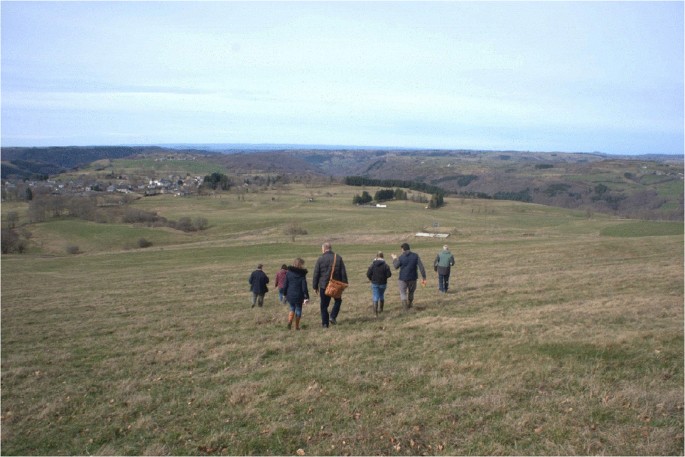
The livestock farming sector is under pressure to transition towards sustainable systems that meet the expectations of both farmers and society. Such transitions require design approaches that combine inputs from science and stakeholders. Step-by-step design approaches to conceive and pilot farming system experiments are considered promising to produce knowledge that is useful for the transition to new systems. However, involving stakeholders in the design process of experiments raises a number of questions about the conditions required for fruitful collaboration. Collaborative processes and the contributions of participants to them often remain vague. Therefore, the objective of this study was to analyze a co-design process of a dairy cattle farming system experiment conducted on a research station in France. Its novelty lies in its focus on participants’ activities and contributions throughout this process rather than on the outcome of the experiment. Seventeen interactions between dairy cattle farmers, local actors in the dairy sector, and scientists of the public sector contributing to the design process were analyzed. The results showed that interaction formats strongly affected participation rates, but also the frequency of co-design activities. Moreover, the participants contributed through collaborative design activities which touched not only the farming system, but also the experimental methods used and the way of collectively working together. In addition, they often carried out more collaborative design activities than were asked of them and redirected conception levels as targeted by the farm experiment leaders on different occasions. Lastly, weak explicit connections between co-design interactions and practices implemented in the experiment were observed. These results allow us to question how to steer collective design processes, identify challenges, and share lessons learnt for future co-design initiatives.
Taverne, M., Bouchon, M., Pomiès, D. et al. Co-designing an eco-citizen dairy cattle farming system experiment: insights from practice. Agron. Sustain. Dev. 45, 75 (2025). https://doi.org/10.1007/s13593-025-01077-4
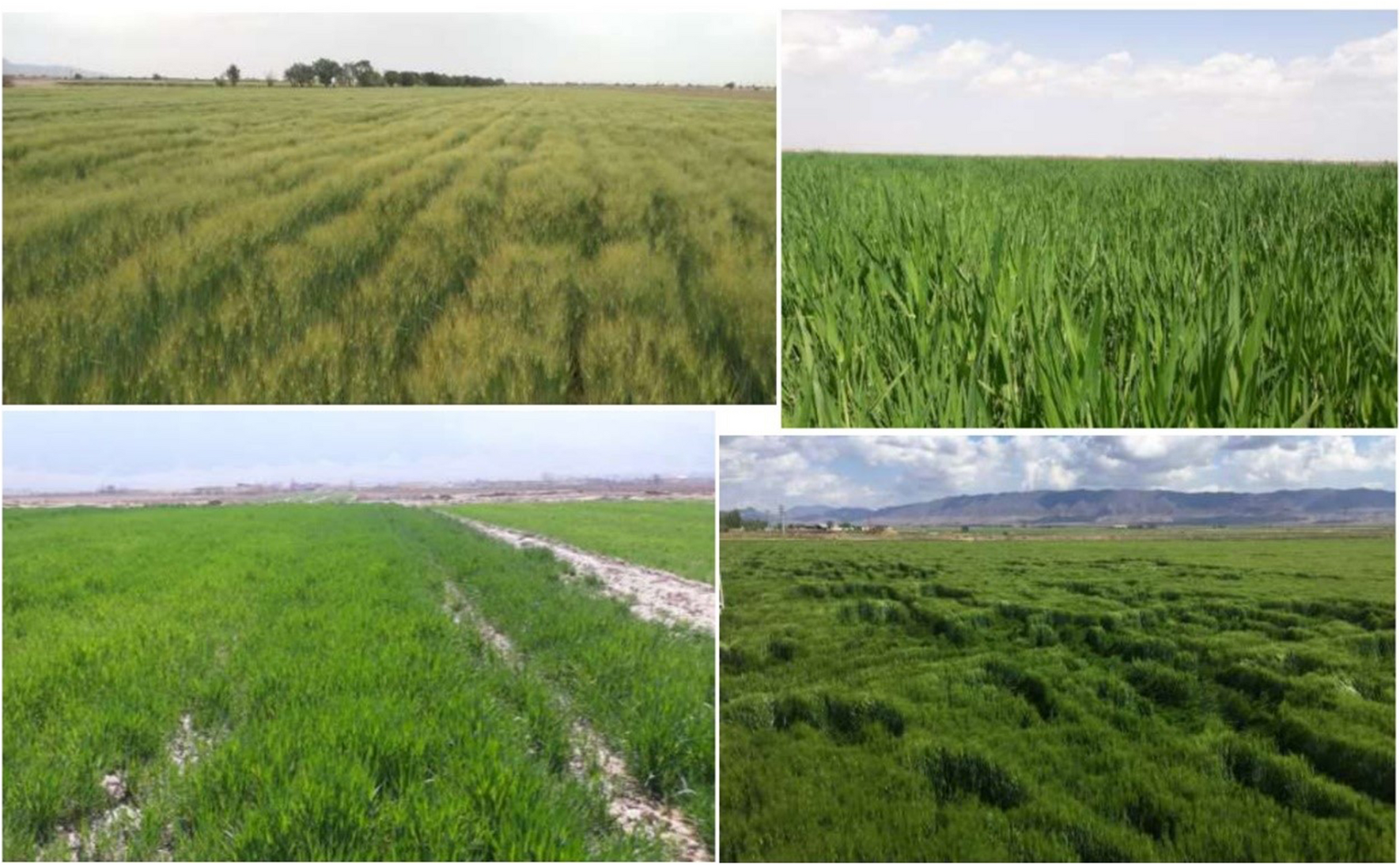 Barley (Hordeum vulgare L.) is one of the most important staple crops grown to produce feed for animals worldwide as well as in Iran with considerable surface in the arid and frost-prone climates. The yield gap analysis is an important topic for researchers worldwide as it aims to identify the factors influencing the gap between actual and potential yields and to enhance food security. To date, almost no long-term assessments have been focused on the barley yield gap analysis for the arid and semi-arid environments, particularly categorizing yield gap. In the current study, we therefore calibrated the APSIM-Barley model for three irrigated barley cultivars, validated the model using 31 field experiment reports, and applied it to simulate long-term (1989 to 2019) yields under eight production levels in eight major barley growing locations of Iran (Arak, Hamedan, Kabudarahang, Marvdasht, Neyshabour, Sabzevar, Saveh, and Shiraz). This is the first time that barley yield gaps are categorized into unexploitable, agronomic, and non-agronomic ones in Iran. The results revealed a huge difference between potential and actual yields (on average, 5.4 t ha−1 yield gap) across the studied locations indicating that the farmers could achieve only 38.6% of the potential yield. Yield gap values varied over locations and seasons. Unexploitable, agronomic, and non-agronomic yield gaps in the studied locations averaged 26.7%, 55.9%, and 17.4% of total yield gap, respectively. The major part of the agronomic yield gap in the studied locations was owing to water limitation, which accounted for ~ 40% of the agronomic yield gap, fold by other agronomic (30%), frost-limited (15.8%), cultivar-limited (13.7%), and sowing date-limited (10.4%) yield gaps. Our findings showed that by improving agronomic management practices, particularly water management and farmers’ non-agronomic conditions, the current yield gaps could be reduced considerably in arid and frost-affected locations.
 rceptions


