

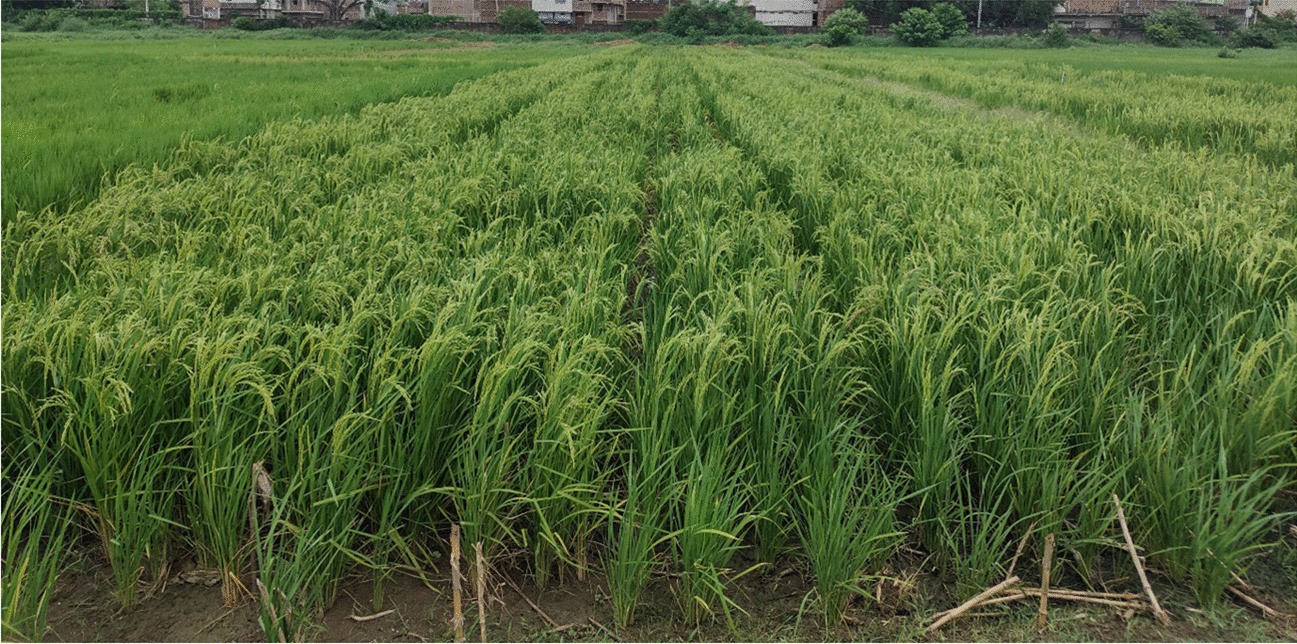
The research objective was to evaluate the ecosystem services of different rice establishment systems to determine their potential and importance as ecological assets and strive to find out the most productive establishment method while minimizing its effects on the natural resources, environment, and human health. A novel valuation approach was developed using an experimental and bottom-up method to assess the value of rice systems based on three aspects: provisioning, regulation and maintenance, and cultural services. To evaluate the ecosystem services of different rice establishment methods, 11 indicators were selected. The seven rice establishment methods evaluated were random-puddled transplanted rice, line- puddled transplanted rice, conventional till-machine transplanted rice, zero till-machine transplanted rice, system of rice intensification, conventional till, and zero till- direct seeded rice. The results revealed that the value of rice ecosystem services across establishment practices averaged US$ 9092 ha-1 yr-1. Direct seeded rice (zero till/conventional till) provided the highest ecosystem services at US$ 9491 ha-1year-1 and random puddled transplanted rice was lowest at US$ 8767 ha-1 year-1. Provisioning, regulation-maintenance, and cultural ecosystem services contributed 20.3,79.4, and 0.3% to the total ecosystem services value.
Dubey, R., Mishra, J., Das, A. et al. Enhancing ecosystem services through direct-seeded rice in middle Indo-Gangetic Plains: a comparative study of different rice establishment practices. Agron. Sustain. Dev. 44, 57 (2024). https://doi.org/10.1007/s13593-024-00992-2
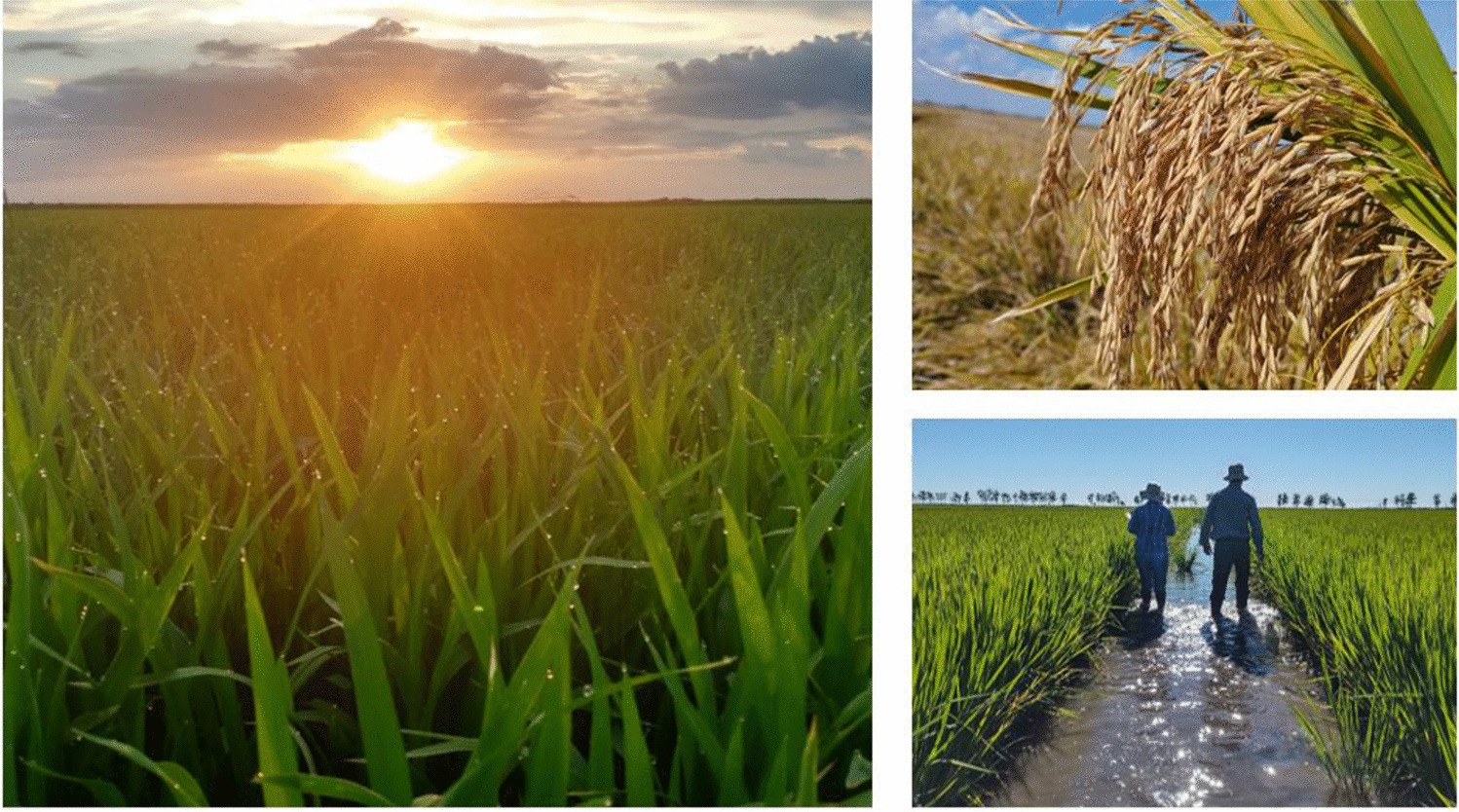 Our study aims to determine the yield potential and yield gap and to identify key factors associated with yield losses in irrigated rice fields in Argentina. Our findings indicated that 22% of the current yield gap is due to the sowing date, 9% is associated with the adoption of rotation/succession, and 5% is associated with the early onset of irrigation up to the V3 stage. The implementation of these practices has demonstrated the potential to reduce the current yield gap from 48% to 33%.
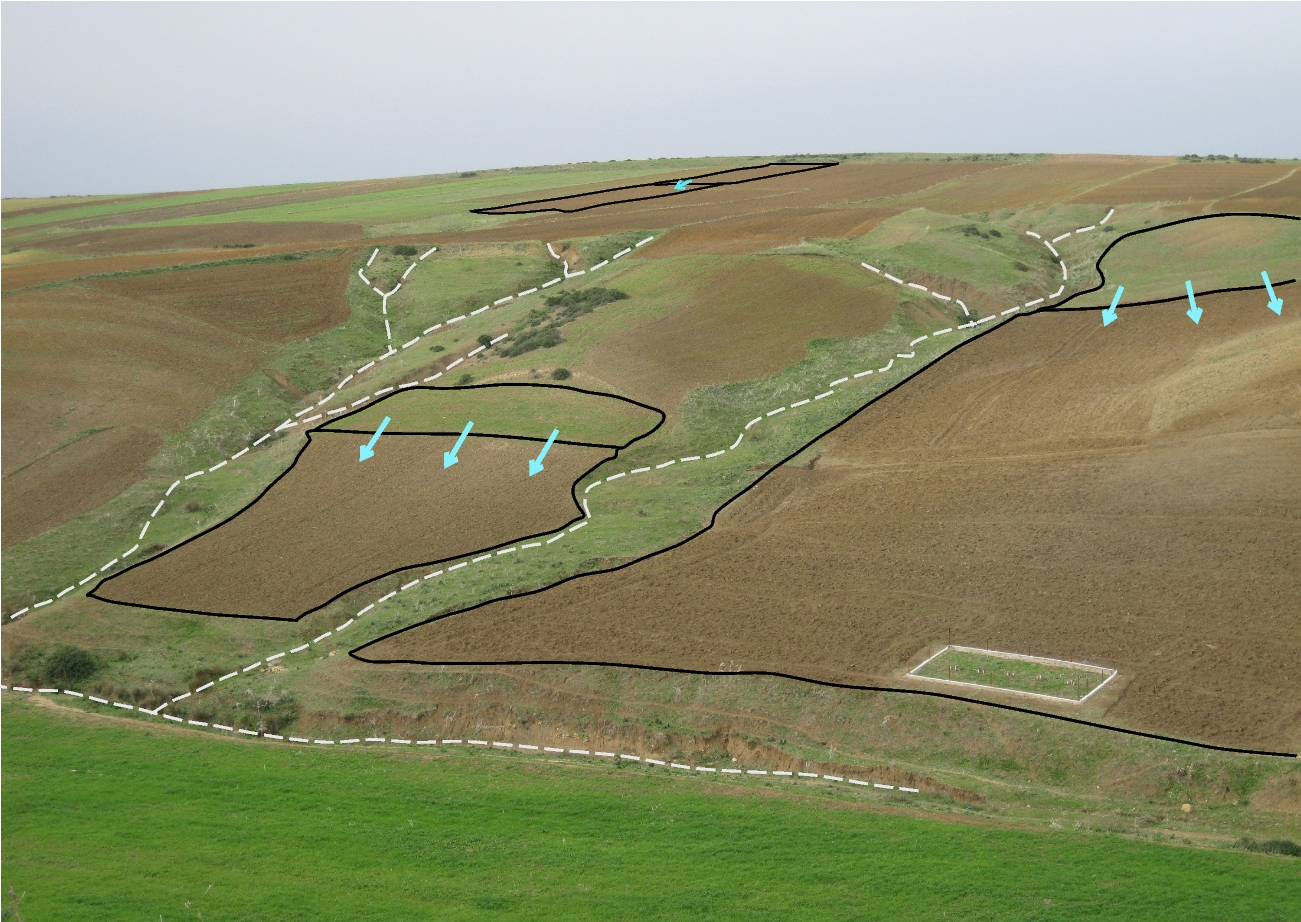 The current study aims to comprehensively investigate the impact of runoff on crop functioning in the context of Mediterranean rainfed annual crops. To quantify this impact, we conduct a numerical experiment using the AquaCrop model and consider two hydrologically connected plots. The experiment explores a range of upstream and downstream agro-pedo-climatic conditions: crop type, soil texture and depth, climate forcing, and the area of the upstream plot. The experiment relies on data collected over the last 25 years in OMERE, an environment research observatory in northeastern Tunisia, and data from literature. A key finding in the results is that water supply through hydrological connectivity can enhance annual crop production under semiarid and subhumid climate conditions. Specifically, the results show that the downstream infiltration of upstream runoff has a positive impact on crop functioning in a moderate number of situations, ranging from 16% (wheat) to 33% (faba bean) as the average across above ground biomass and yield.
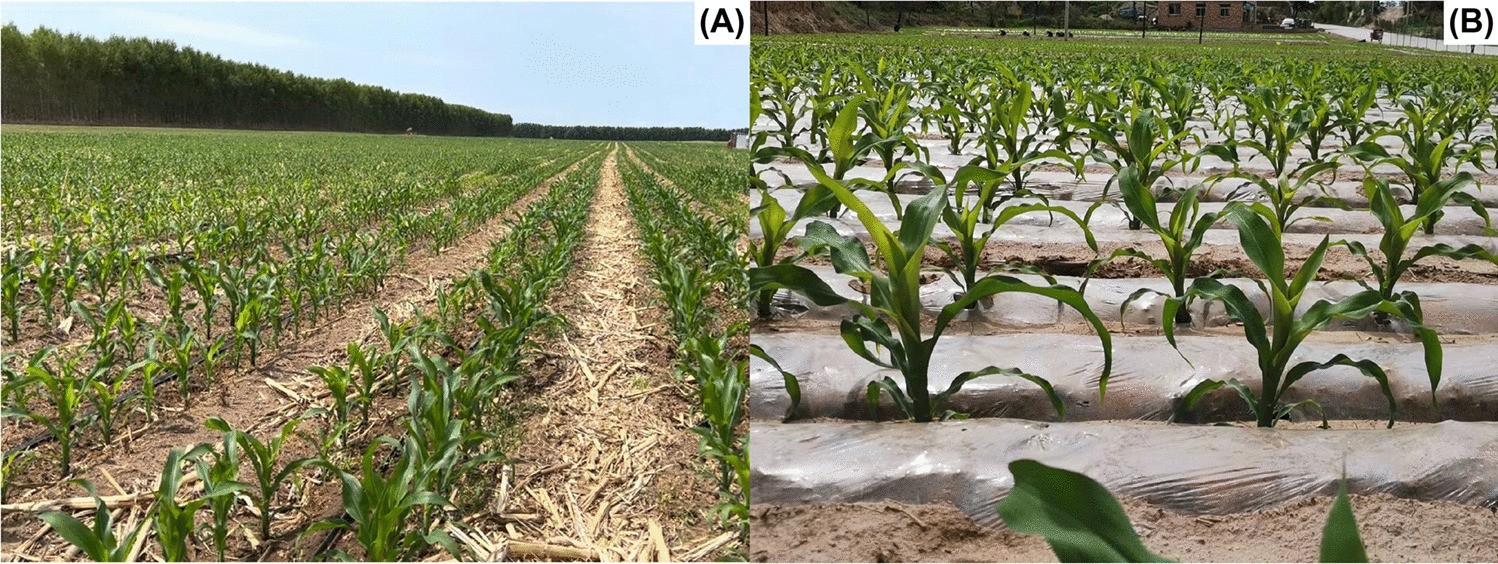 Using the calibrated DeNitrification-DeComposition (DNDC) model, we conducted a long-term simulation (1980−2019) incorporating various scenarios of nitrogen fertilizer and mulch, resulting in a baseline scenario and five mitigation scenarios. We revealed an average net global warming potential during the maize growing season of 5293 kg CO2 eq ha−1, with the most GHG derived from N2O (53%). Considering GHG costs, the net environmental and economic benefits in maize amounted to 5089 CNY ha−1. Our results, which provide the first calculation of the combined benefits of mulch and nitrogen fertilizer including GHG costs, not only underscore the immense potential of mulch for enabling carbon neutrality, but also offer valuable insights for policymakers and industry in selecting suitable mulch techniques for agricultural production.
 n used to increase forage yield and soil fertility in managed grasslands. We conducted a 5-year field experiment across 3 sites to investigate the effects of legume-grass seeding ratio and P fertilization on forage yield and soil quality. Our results suggests that low legume seeding proportion in legume-grass mixtures combined with moderate nutrient management is a useful strategy for sustainable and highly productive managed grasslands.


 rceptions
  There is an urgent need for plant production systems to use more sustainable plant protection solutions with less conventional pesticides. While low-risk plant protection products are promising alternatives, the availability of these products remains low on the European market. Here, we summarize challenges and opportunities for increasing these products and define knowledge gaps related to their efficiency, application, and economics.